Water Extraction in Weatherford, TX
Standing water moves under baseboards and into drywall while it sits. The extraction crew pulls it out with truck-mounted extraction and sets drying the same visit.
(888) 527-9134Get the water pulled out now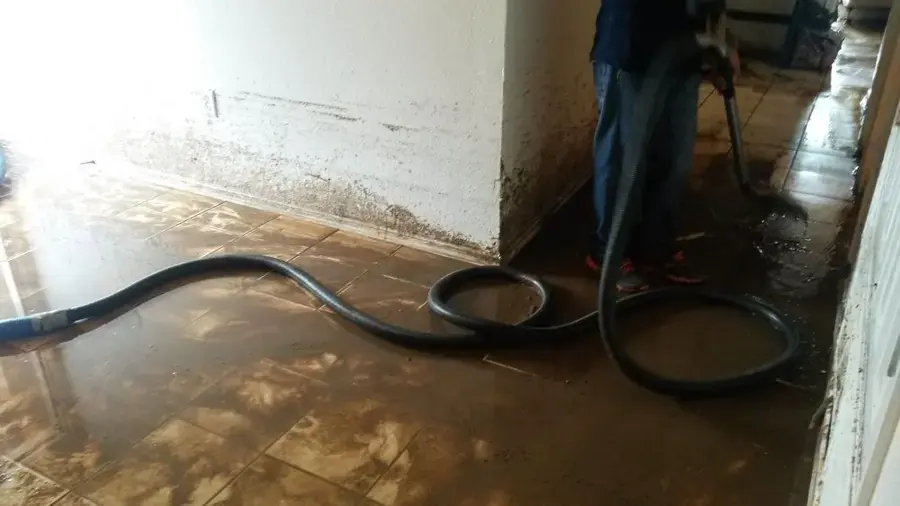
What to do first about water extraction and removal in Weatherford
- Stop the source
Shut the main or the fixture valve if you can reach it safely.
- Kill wet circuits
Switch off breakers for wet rooms if the panel itself is dry.
- Stay off wet floors near outlets
Standing water near cords and outlets is a shock risk.
- Photograph first
Take wide and close photos before anything is moved or thrown out.
- Lift what you can
Pull rugs, furniture legs and boxes off the wet floor.
What does water extraction and removal cost in Weatherford, TX?
In Weatherford, TX, water extraction on its own typically runs $300 to $1,500, and most jobs roll into drying for a total of $1,200 to $5,000, driven by the square footage, the water category and how long the water sat.
Single room, clean water
- Tile, vinyl or low-pile carpet
- Extraction plus a short drying setup
Several rooms or carpet and pad
- Pad lifted or removed
- Wall base checked with meters
Whole floor or Category 3
- Contaminated water removed
- Porous materials pulled, then dried
Ranges move with the water category, the square footage, the material class and how fast drying started. Run the numbers in the water damage cost calculator for a planning range.
How water extraction and removal is handled in Weatherford
- 1
Map the moisture
The tech who does the walkthrough uses thermal imaging and pinless meters to map every wet wall, floor and cavity before any equipment goes down.
- 2
Extract the water
The extraction crew pulls standing water with truck-mounted extraction, so it leaves the building instead of moving into the next room.
- 3
Set the drying plan
Air movers go in at each room's evaporation load, with LGR dehumidifiers pulling the moisture back out of the air.
- 4
Verify dry
Most crews log readings daily and pull equipment only when the wet material sits within 2 to 4 points of a dry reference.
Why extraction comes before anything else
Every gallon left on the floor has to evaporate later, and evaporation is the slow, expensive part of a dry-out. The extraction crew removes as much liquid as possible first, so air movers and dehumidifiers only have to handle what soaked into the materials. On a Weatherford slab home with tile or luxury vinyl, that first pass often decides whether the flooring and the bottom of the drywall can be saved.
Truck-mounted extraction pulls water through long hoses to a unit outside, so the water leaves the house instead of being pushed into the next room. Portable extractors and weighted extraction tools handle upstairs rooms, closets and carpet that is still holding water in the pad.
What the extraction crew checks while the water comes out
- Category of water. A supply line leak starts as Category 1, while a washer drain or a flash flood through the door is Category 2 or 3 and changes what can stay.
- Where the water traveled. Thermal imaging and pinless meters show water wicking up drywall and under cabinets that a quick look misses.
- Carpet and pad. Clean-water carpet can often be floated and dried in place; contaminated pad comes out.
- Hidden pockets. Wall cavities, toe kicks and the gap under tub skirts hold water that needs its own drying plan.
Mold can start on wet drywall and wood within 24 to 48 hours, which is why the extraction crew moves straight from pulling water to setting air movers and LGR dehumidifiers. The EPA moisture and mold overview covers the health side of that window.
Extraction on Weatherford homes and floors
Most homes built around Weatherford since the 1970s sit on a concrete slab, so water spreads across the floor instead of draining into a crawlspace. That makes fast extraction the single biggest factor in how much flooring survives. Older pier-and-beam homes near the courthouse square are different: water drops through the subfloor, so the crew checks the crawlspace and the joists as well as the room above.
After a burst pipe or a water heater failure, extraction usually finishes in a single visit, then structural drying runs for several days until the readings meet the goal.
What goes into the file
Before and after extraction, the crew records the moisture map, the category of water, photos of every affected room and the equipment set. Those notes become the start of the drying log an adjuster reviews. Coverage depends on the policy, so it is worth checking the details with your own insurer, and the Texas Department of Insurance has consumer information on homeowner claims.
How water extraction and removal work is done in Weatherford
Rapid local response
Dispatch runs day and night, and the extraction crew rolls with pumps, air movers and meters matched to the size of the loss.
IICRC S500 drying standard
The tech who does the walkthrough maps moisture first, and equipment stays until the readings say dry, not until it looks dry.
Claim-ready documentation
Timestamped photos before demolition, a moisture map and daily drying logs go into the file an adjuster reviews.
Parker County water experts
Slab leaks on clay, spring hail, hard freezes and Clear Fork flooding are the losses local crews work every year.
Covering Weatherford and Parker County
The Weatherford restoration crew covers the courthouse square, Lake Weatherford and every neighborhood in ZIP codes 76085, 76086, 76087, 76088, plus Hudson Oaks, Willow Park, Aledo, Springtown and the rest of the county.
See every town and ZIP coveredRelated water damage services in Weatherford
Water Extraction and Removal questions in Weatherford, TX
How quickly should standing water be extracted?
As soon as possible. Water keeps wicking into drywall, trim and cabinet bases while it sits, and mold can start inside 24 to 48 hours. Extraction first, then drying, keeps the loss smaller.
Can a shop vac replace professional extraction?
A shop vac helps with a small spill, but it cannot pull water out of carpet pad or off a whole floor fast enough. Truck-mounted extraction removes far more water per pass, which shortens the drying time.
Will the carpet have to be thrown out?
Not always. Carpet soaked with clean water is often dried in place after extraction. Pad and carpet soaked by sewage or flood water are removed because Category 3 water cannot be cleaned out of porous materials.
Does extraction finish the job?
No. Extraction removes the liquid, and structural drying removes what soaked in. Air movers and LGR dehumidifiers run until readings show the materials are back near normal.
What does water extraction cost in Weatherford?
Extraction alone typically runs $300 to $1,500, and most jobs total $1,200 to $5,000 once drying is added, depending on square footage, water category and how long the water sat.
Is water extraction covered by insurance?
Sudden and accidental water, like a burst supply line, is often covered, while rising flood water usually falls under flood coverage instead. Coverage depends on your policy, so check with your own insurer.
Water Extraction and Removal in Weatherford? Call now.
Water keeps moving into drywall, cabinets and subfloor until it is extracted. The Weatherford restoration crew handles the extraction and the drying goal from the first call.
(888) 527-9134Start the water extraction and removal dry-out