Structural Drying and Dehumidification in Weatherford, TX
Surface-dry is not dry. The drying team maps moisture inside walls, floors and framing, then runs air movers and LGR dehumidifiers until readings meet the IICRC S500 goal.
(888) 527-9134Get structural drying set up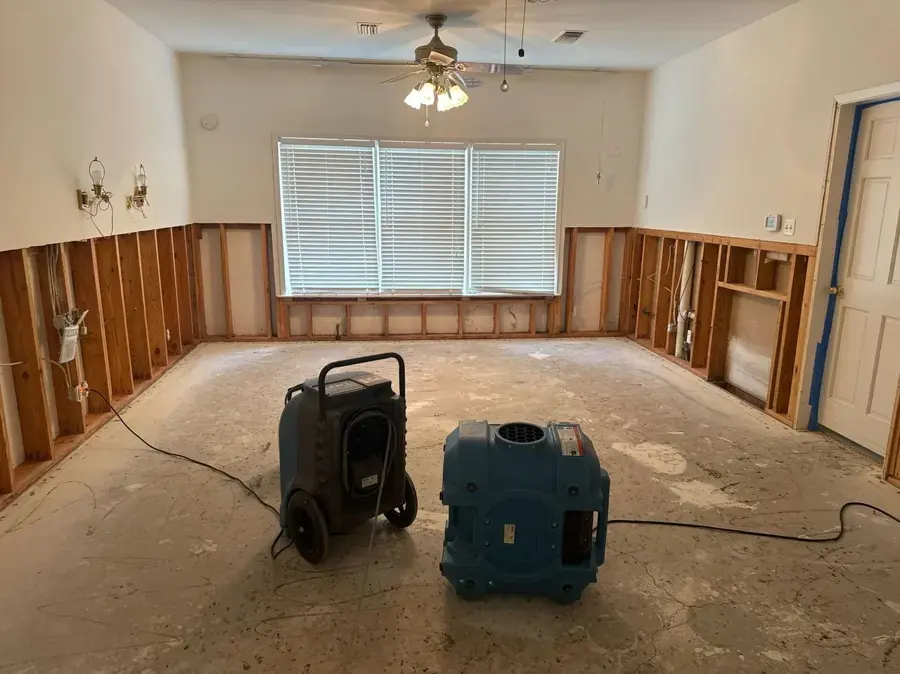
What to do first about structural drying and dehumidification in Weatherford
- Stop the water
Drying cannot start until the source is off and repaired.
- Leave the equipment running
Turning units off resets the drying.
- Keep doors and windows as set
The crew sets airflow for the room; changes slow it down.
- Keep the thermostat steady
The drying plan accounts for temperature and humidity.
What does structural drying and dehumidification cost in Weatherford, TX?
In Weatherford, TX, structural drying typically runs $1,200 to $6,000, driven by the number of rooms, the class of the loss, how many air movers and dehumidifiers are needed and how many days the readings take to reach the goal.
Class 1 or 2, one area
- A few air movers
- One LGR dehumidifier
Several rooms
- Wall cavity drying
- Daily readings and logs
Class 3 or 4
- Ceilings, framing, concrete
- Desiccants or mats
Ranges move with the water category, the square footage, the material class and how fast drying started. Run the numbers in the water damage cost calculator for a planning range.
How structural drying and dehumidification is handled in Weatherford
- 1
Map the moisture
The tech who does the walkthrough uses thermal imaging and pinless meters to map every wet wall, floor and cavity before any equipment goes down.
- 2
Extract the water
The extraction crew pulls standing water with truck-mounted extraction, so it leaves the building instead of moving into the next room.
- 3
Set the drying plan
Air movers go in at each room's evaporation load, with LGR dehumidifiers pulling the moisture back out of the air.
- 4
Verify dry
Most crews log readings daily and pull equipment only when the wet material sits within 2 to 4 points of a dry reference.
What structural drying means
Once standing water is gone, the water that soaked into drywall, framing, subfloor and concrete is still there. Structural drying pulls it out of the building itself, not just off the surface. The IICRC S500 standard sets the method: map the moisture, set equipment to the size and class of the loss, record readings and keep drying until the wet materials match a dry reference.
In Weatherford, summers bring high heat and humid spells, and winters swing between mild days and hard freezes. The drying plan accounts for outdoor conditions, so dehumidifiers do the work instead of the humid air outside.
The equipment and why it is placed where it is
- Air movers push dry air across wet surfaces to speed evaporation, set to each room's evaporation load.
- LGR dehumidifiers pull that moisture back out of the air, even as the air gets drier.
- Desiccant dehumidifiers handle dense Class 4 materials like concrete, plaster and hardwood.
- Wall cavity and floor systems push air into walls and under floors through small access points.
- Thermal imaging and meters show where water is hiding and when it is gone.
The drying goal is not a date on a calendar. Crews compare daily readings against a dry reference material in an unaffected part of the same house, and equipment comes out when the wet material lands within 2 to 4 points of it.
Class of water loss
The class describes how much water there is and how hard it is to dry. Class 1 is a small area with low-porosity materials. Class 2 is a whole room with wet carpet and walls. Class 3 adds ceilings and insulation, often from above. Class 4 means dense materials like concrete, hardwood and plaster that need special drying. Class sets the number of air movers and dehumidifiers.
Structural drying follows water extraction on nearly every job, from a burst pipe to a slab leak.
The logs that support the claim
Daily psychrometric readings, the temperature and humidity inside and outside, and material readings from each wet area go into the drying log. That log shows an adjuster why each piece of equipment was there and when drying was complete. The EPA moisture and mold overview explains why this matters for preventing growth after 24 to 48 hours. Coverage depends on your policy, so check with your own insurer.
How structural drying and dehumidification work is done in Weatherford
Rapid local response
Dispatch runs day and night, and the extraction crew rolls with pumps, air movers and meters matched to the size of the loss.
IICRC S500 drying standard
The tech who does the walkthrough maps moisture first, and equipment stays until the readings say dry, not until it looks dry.
Claim-ready documentation
Timestamped photos before demolition, a moisture map and daily drying logs go into the file an adjuster reviews.
Parker County water experts
Slab leaks on clay, spring hail, hard freezes and Clear Fork flooding are the losses local crews work every year.
Covering Weatherford and Parker County
The Weatherford restoration crew covers the courthouse square, Lake Weatherford and every neighborhood in ZIP codes 76085, 76086, 76087, 76088, plus Hudson Oaks, Willow Park, Aledo, Springtown and the rest of the county.
See every town and ZIP coveredRelated water damage services in Weatherford
Structural Drying and Dehumidification questions in Weatherford, TX
What is the IICRC S500 standard?
It is the industry standard for professional water damage restoration. It covers how to inspect, classify, extract, dry and document a water loss.
Why can't the equipment be turned off at night?
Turning air movers and dehumidifiers off lets humidity climb back up and stalls the drying, which adds days to the job.
How long does structural drying take?
A contained Class 1 loss usually dries in three to five days. Hardwood, plaster, concrete and multi-layer flooring take longer.
What is an LGR dehumidifier?
Low grain refrigerant dehumidifiers keep pulling water out of the air even as it gets dry, which makes them the workhorse of structural drying.
What does structural drying cost in Weatherford?
Most jobs run $1,200 to $6,000, depending on the number of rooms, the class of the loss and how many days the readings take.
How is dry measured?
Crews compare readings from wet materials to a dry reference in an unaffected part of the house. Equipment comes out when the wet material is within 2 to 4 points of it.
Structural Drying and Dehumidification in Weatherford? Call now.
Water keeps moving into drywall, cabinets and subfloor until it is extracted. The Weatherford restoration crew handles the extraction and the drying goal from the first call.
(888) 527-9134Start the structural drying and dehumidification dry-out